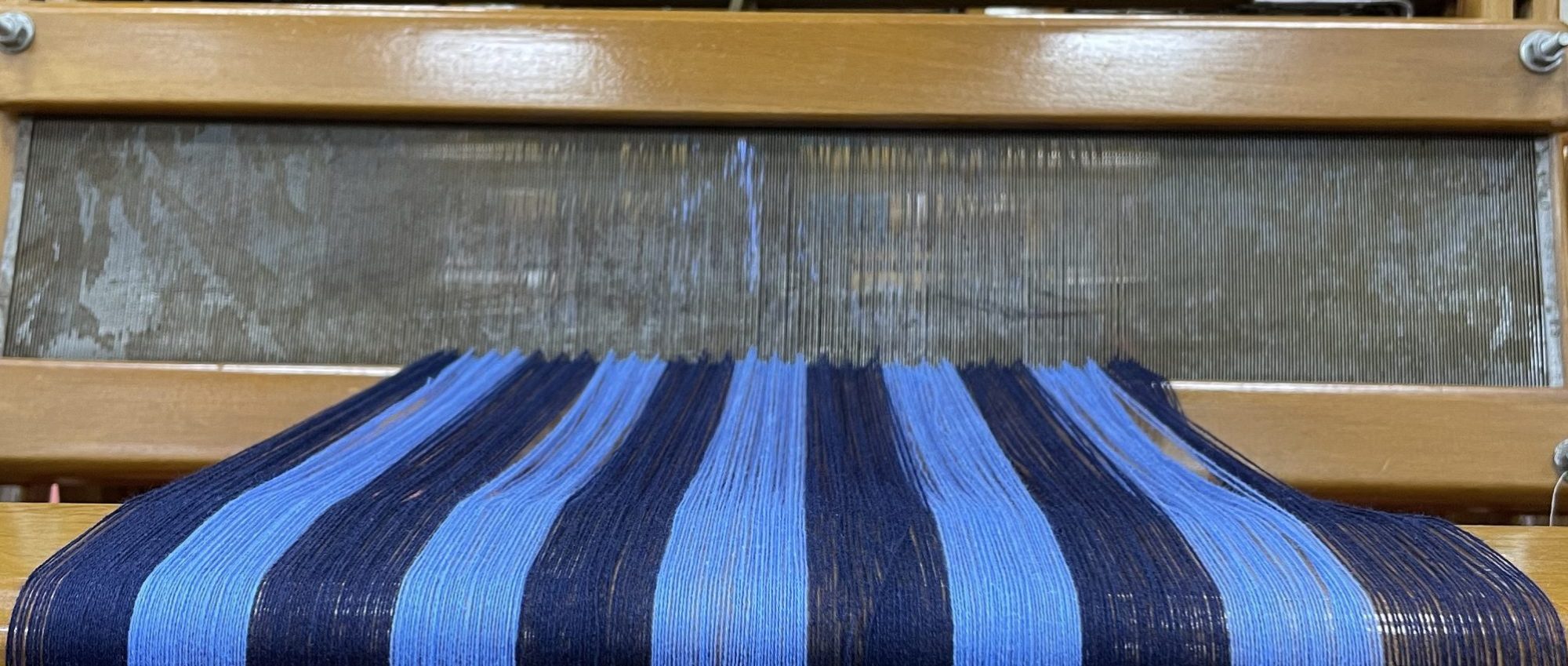

Hello Everyone!
Here I come with my next blog. It is based on my recent visit to a Traditional Textile Mill.
Are you asking me Where? and Which Industry? Let me tell you. We Visited to A Textile Industry near Theur, Pune.
Introduction:
When we heard from outside we could hear a lot of noise that sounded like a rhythmic and music to my ears. There were many power looms, those were weaving the beautiful sarees of different designs, colours and patterns. I then became curious to know many things about …how the designs are made? how the threads are coloured? what are the threads made up of? how the threads are weaving in various patterns? I know you also may be having much more questions. So just have a look at the below sections about what i saw and studied there.
Before we jump to the actual process let us understand some basics as i also studied them through various online reading.
What is Textile Design?
Wikipedia defines it as – Textile design is essentially the process of creating designs for woven, knitted or printed fabrics or surface ornamented fabrics. In other words – Textile Design is a process from the raw material into finished product. Fiber, yarn and finishes are the key elements to be considered during the textile design procedure.
Textile designing is a creative field that includes fashion design, carpet manufacturing and any other cloth-related field. Textile design fulfils a variety of purposes in our lives. For example, our clothing, carpets, drapes, towels, and rugs are all a result of textile design.Textile designing is a creative field that includes fashion design, carpet manufacturing and any other cloth-related field.
What I saw there?
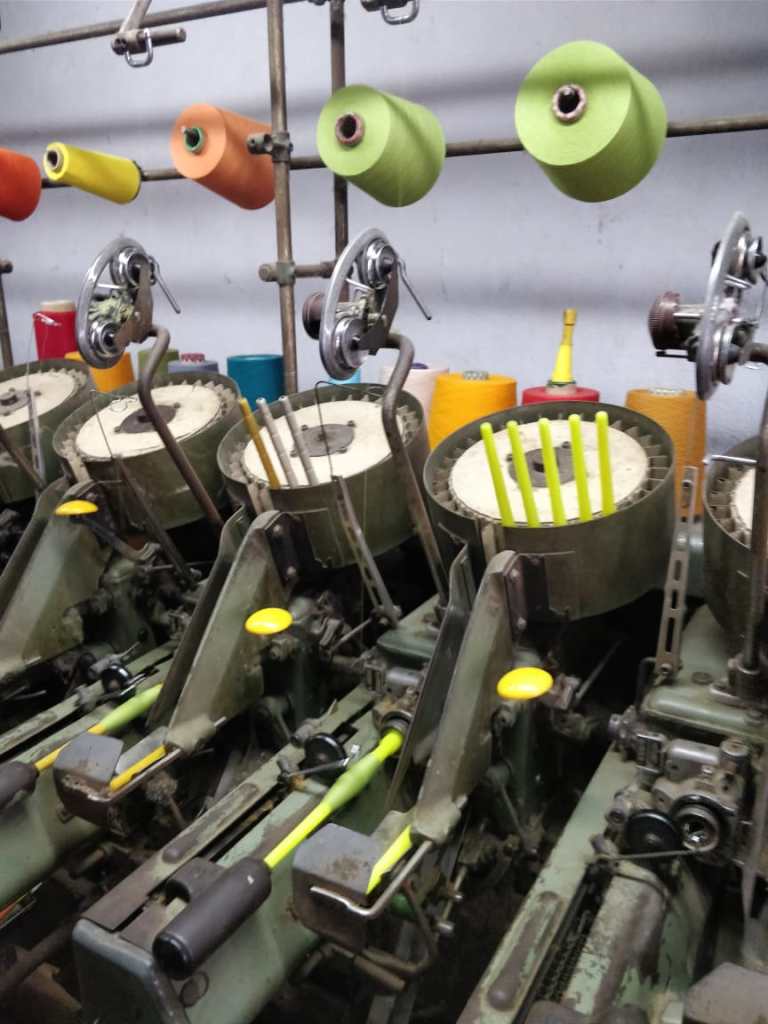
This is the process of making the reels of required coloured and types of threads.
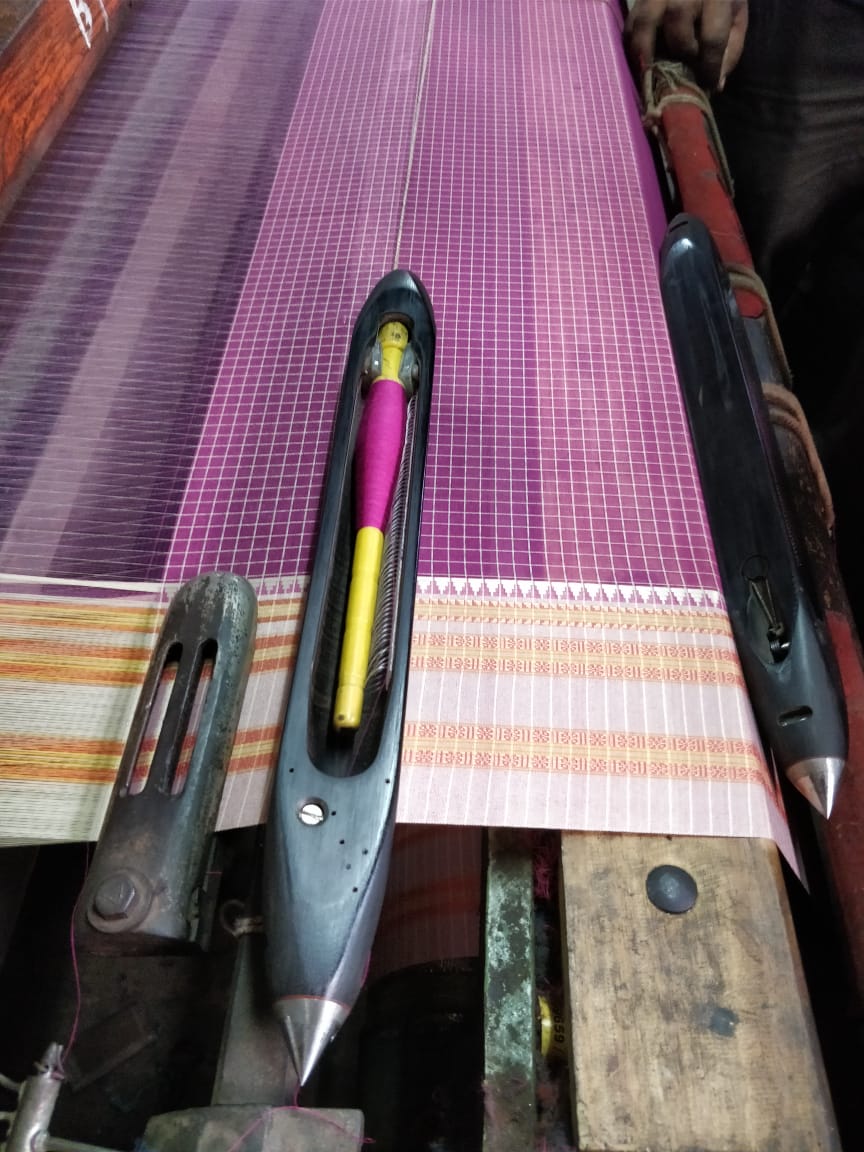
The reels made in the above step is inserted in a “fly shuttle” for weaving process.
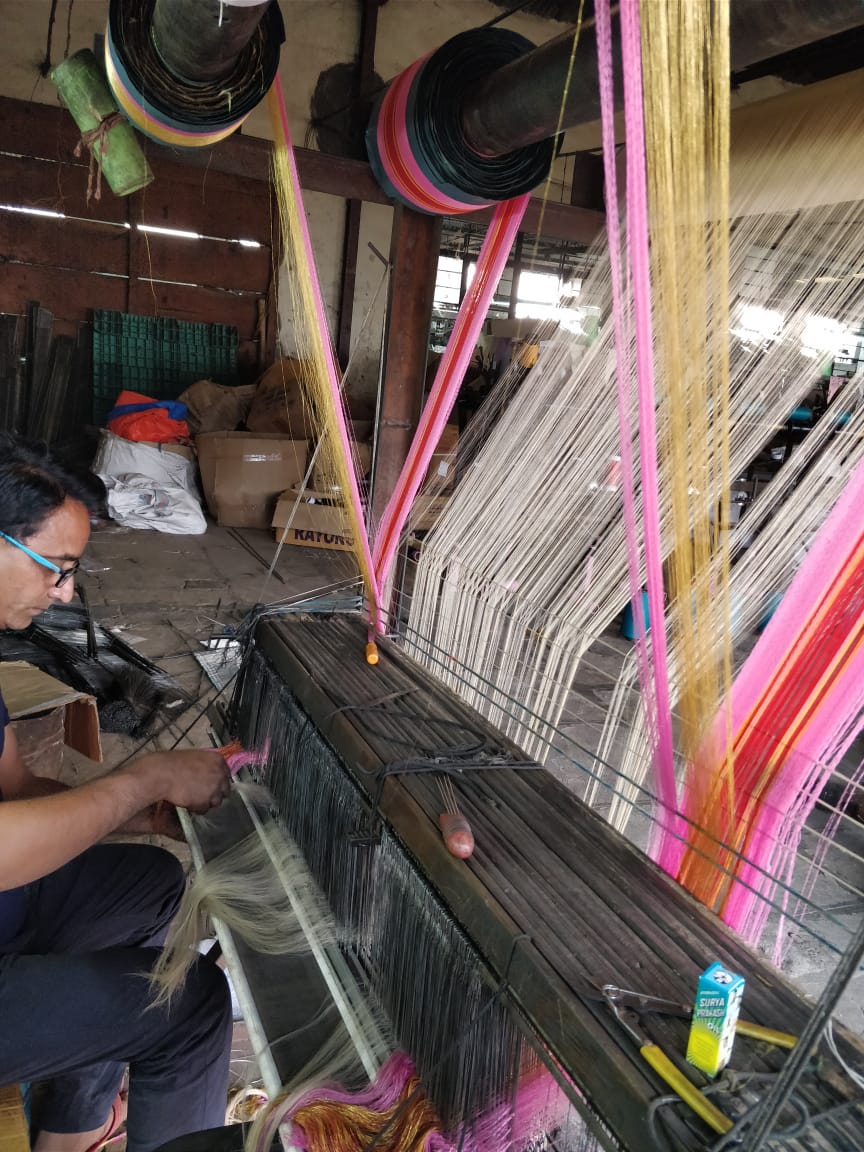
The shuttle pit loom is now being setup as per design patterns to be created for sarees.
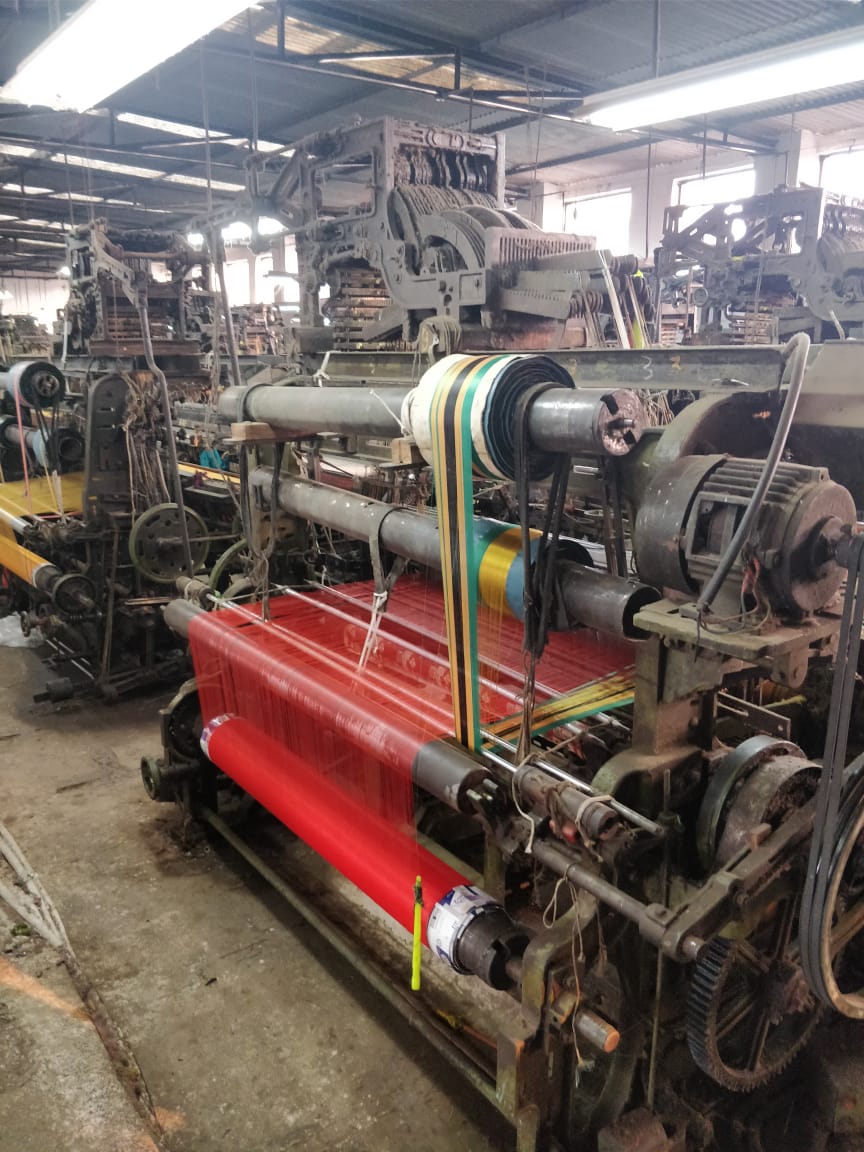
In this process we see the beautiful patterns of main saree and the border design as well.
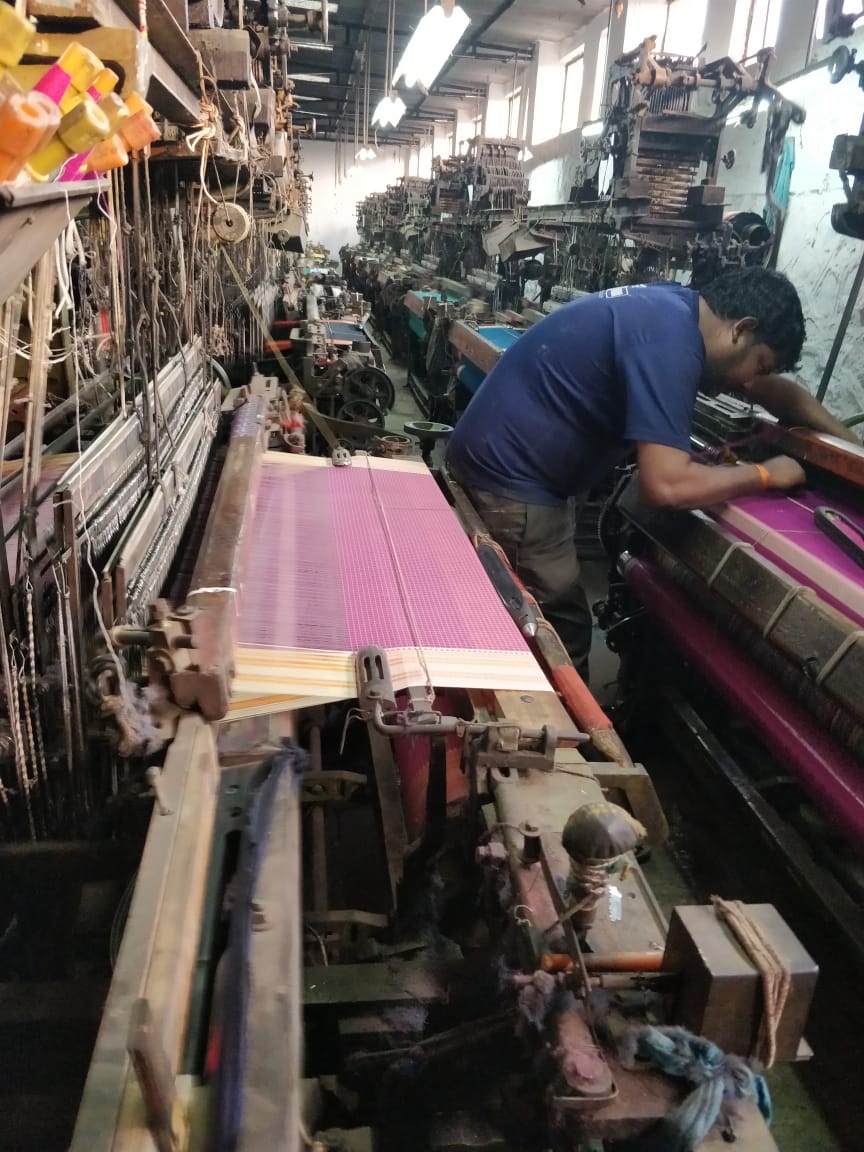
Here you can see many looms in a row and they are making sarees of various designs and patterns.
I was really excited to see all the looms in action and how the raw material of threads is being converted into beautiful sarees as a finished product. This lead me to do some more reading online about the textile design.
What are the different types of Textiles?
Again Wikipedia tells – Textiles are made from many materials, with four main sources:
1 – animal (wool, silk),
2 – plant (cotton, flax, jute, bamboo)
3 – mineral (asbestos, glass fibre) and
4 – synthetic (nylon, polyester, acrylic, rayon). The first three are natural.
What are the various process steps in making the finished product?
From fiber to cloth the whole process is basically run through four main steps as 1 – spinning, 2 – weaving or knitting, 3 – dyeing or printing and 4 – garments making.
I found a very interesting information (please click the link below) in the form of flowcharts for these four main steps.
http://textileaid.blogspot.com/2013/12/process-flowchart-of-spinning-weaving.html
Let me stop here and ask you all for your feedbacks and review comments. If you have also found interesting online content about textile designs then please share the links.
Thank you very much for reading my blog and let us share and learn together.
Stay Tuned..
 akofydesign.com
Hey,
Again a nice blog to keep the track. Well informed. Keep going.!!!
LikeLike
Yess. Thank you so much!!
LikeLike
What u wrote is too good but for a lay man it’s is lot of kashta to read all.. so he might miss some imp points
LikeLike
Yes I got your point….I’ll look forward For this While writing the next blog. Thanks for your Feedback
LikeLike
Hey..it’s really great content akofy .Keep going hon.❤️
LikeLike